
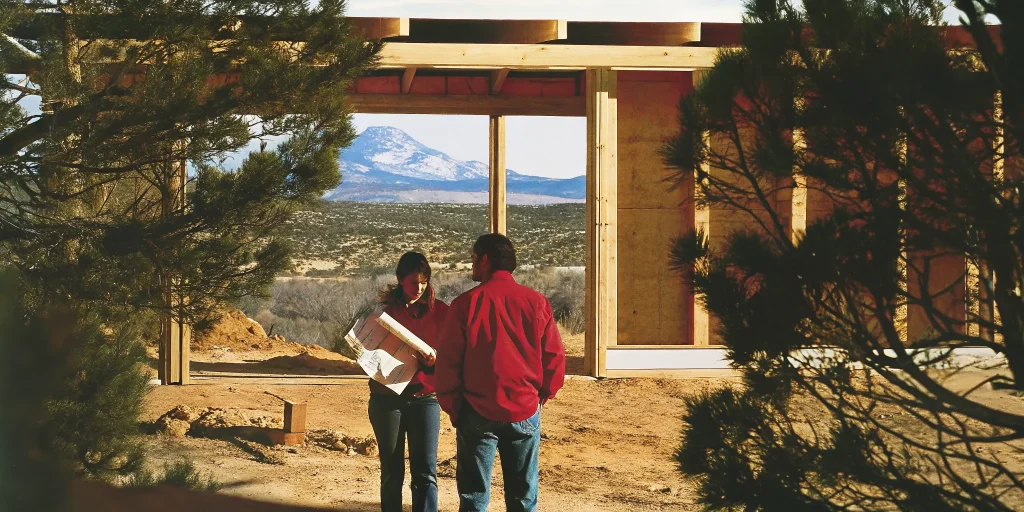
Choosing how to build in Western Colorado starts with more than a floor plan. The builder you select shapes your options for design, lot preparation, communication, timeline, and the way your home fits daily life in Grand Junction or across Mesa County.
Ready to compare your options? Schedule a consultation with Integrity Homes.
The custom home builder vs production home builder pros cons come down to priorities: production builders generally offer standardized plans, scale, and predictable processes, while custom builders provide more flexibility and personalization. A semi-custom approach can bridge those advantages, giving homeowners meaningful design choices within a guided process.
Neither model is automatically right for every buyer. Your lot, preferred level of involvement, timeline, and vision for the finished home all matter. Our Buyer’s Guide offers broader planning context. First, it helps to understand what a production builder actually delivers and why that model works well for some homeowners.
What Is a Production Home Builder?
A production home builder is a large-scale company that constructs many homes each year, often dozens or hundreds, using a repeatable system. Instead of designing every home from the ground up, the builder offers a catalog of pre-designed floor plans, elevations, finishes, and upgrade packages. Buyers select from those established options, then the builder completes the home within a planned development or subdivision.
Standardization is the defining feature. The same floor plan may be built on multiple lots, with changes usually limited to items such as cabinets, flooring, fixtures, appliances, or exterior colors. Major structural revisions are less common because the builder’s efficiency depends on established plans, material lists, crews, and construction sequences. That structure gives buyers a clearer path from contract to move-in, with fewer design decisions to manage along the way.
How production building keeps costs predictable
Production builders purchase materials and coordinate labor at a larger scale. Repeating similar designs can reduce waste, simplify procurement, and create economies of scale that support a lower initial price than a highly individualized build. Fixed-price packages and standardized options may also make the purchase easier to compare from the beginning. Although buyers should still review what the base price includes and which upgrades cost extra.
Where production homes are typically built
These homes are commonly located in master-planned communities developed in phases. A community may include shared amenities such as parks, pools, playgrounds, or recreation spaces, depending on the development. Homeowners associations are also common. HOA guidelines can help maintain a consistent neighborhood appearance, but they may limit exterior changes, landscaping choices, or future additions.
Why buyers choose a production home
The streamlined process can be a strong fit for buyers who want a predictable plan, established neighborhood infrastructure, and a faster move-in. Standardized workflows and established supply chains generally make scheduling more predictable than a fully custom project. Some builders also offer completed or nearly completed homes for buyers with an immediate housing need, with ready homes often available quickly depending on inventory and closing requirements.
Understanding this model creates a useful starting point for comparing priorities such as cost, timing, lot selection, and design control. For the broader decision framework, read the New Homes Buyer’s Guide.
What Makes a Custom Builder Different?
A custom builder starts with the homeowner’s priorities rather than a fixed catalog. That can mean reshaping a floor plan, creating a dedicated space for a hobby, improving accessibility, or orienting the home to suit a specific lot. The goal is not simply to select finishes. It is to create a home that supports how your family lives, with design and construction decisions made together throughout the project.
Design guidance from the beginning
Custom building is a collaborative process involving the homeowner, designer, and builder. At Integrity Homes, Charlotte Balerio provides in-house interior design expertise, helping connect the floor plan, materials, lighting, finishes, and daily routines into one cohesive result. This design-first approach gives homeowners room to refine their ideas before construction begins, rather than trying to adapt a completed production plan to their needs.
That partnership is one reason the design-build approach matters so much for Colorado home buyers. When design and construction are coordinated under one team, decisions can be evaluated for both visual impact and buildability. Homeowners also have a clearer point of contact as the project moves from concept to permitting and construction.
Semi-custom flexibility without an open-ended process
Integrity Homes uses a semi-custom model that sits between high-volume production building and a fully custom architect-led project. Homeowners can begin with proven plans and redesign them to better fit their lifestyle, lot, and priorities. This creates meaningful personalization while keeping the process structured and approachable.
Transparency is part of that structure. Through Buildertrend, homeowners can follow project information, selections, communication, and progress in one place. The home building process is easier to understand when key decisions and updates are visible instead of scattered across texts, emails, and separate spreadsheets.
Connected site preparation and construction
A custom approach also matters when the land is not straightforward. Unique lot configurations may require tailored grading, excavation, utility planning, or other site-specific decisions. Integrity Homes is vertically integrated with High Grade Concrete and Excavation, giving the team direct experience with the sitework that supports the home. That connection can make it easier to coordinate lot preparation with the home’s design and construction requirements.
For semi-custom projects, Integrity Homes follows a structured design, permitting, and construction sequence tailored to each home and lot. The result is a collaborative path to a personalized home, with flexibility where it matters and a defined process to keep the work moving.
Comparing Custom vs Production Home Builders: Pros and Cons for Cost, Timeline, and Design
The right choice depends on which tradeoffs matter most for your move, your lot, and the home you want to live in for years. Production and custom building are not simply different price points. They are different ways of planning, selecting, and delivering a home.
| Consideration | Production builder | Custom builder |
|---|---|---|
| Cost | Lower upfront cost with standardized pricing, plans, materials, and upgrade packages. | Custom construction reflects the specific plan, finishes, and lot conditions you choose, rather than a fixed price list. Site-specific engineering and personalization can increase the investment. |
| Timeline | Standardized workflows and an established supply chain support a faster, more predictable schedule, and move-in-ready or nearly-complete homes may already be available. | Custom construction follows a longer, more variable schedule because design decisions, permitting, and construction are tailored to the project. |
| Design flexibility | Choose from established floor plans, finishes, and structured upgrade options. Major structural changes are usually limited. | Plan the layout, finishes, storage, and specialized spaces around your lifestyle, with complete design control. |
| Lot suitability | Best suited to prepared lots in planned communities where the available plans fit the development and its requirements. | Better suited to unique or challenging lots that require tailored placement, grading, or site engineering. |
| Resale value | Predictable neighborhood design can appeal to buyers who want familiar layouts and community amenities. | Distinctive, high-quality features may help the home stand apart and support superior resale value in the right market. |
Integrity Homes offers a semi-custom path for buyers who want a more guided process without giving up meaningful personalization. It bridges production efficiency and custom design, allowing a proven plan to be refined around your preferences, lot, and priorities. That can make the timeline more manageable while preserving the decisions that have the greatest effect on daily life.
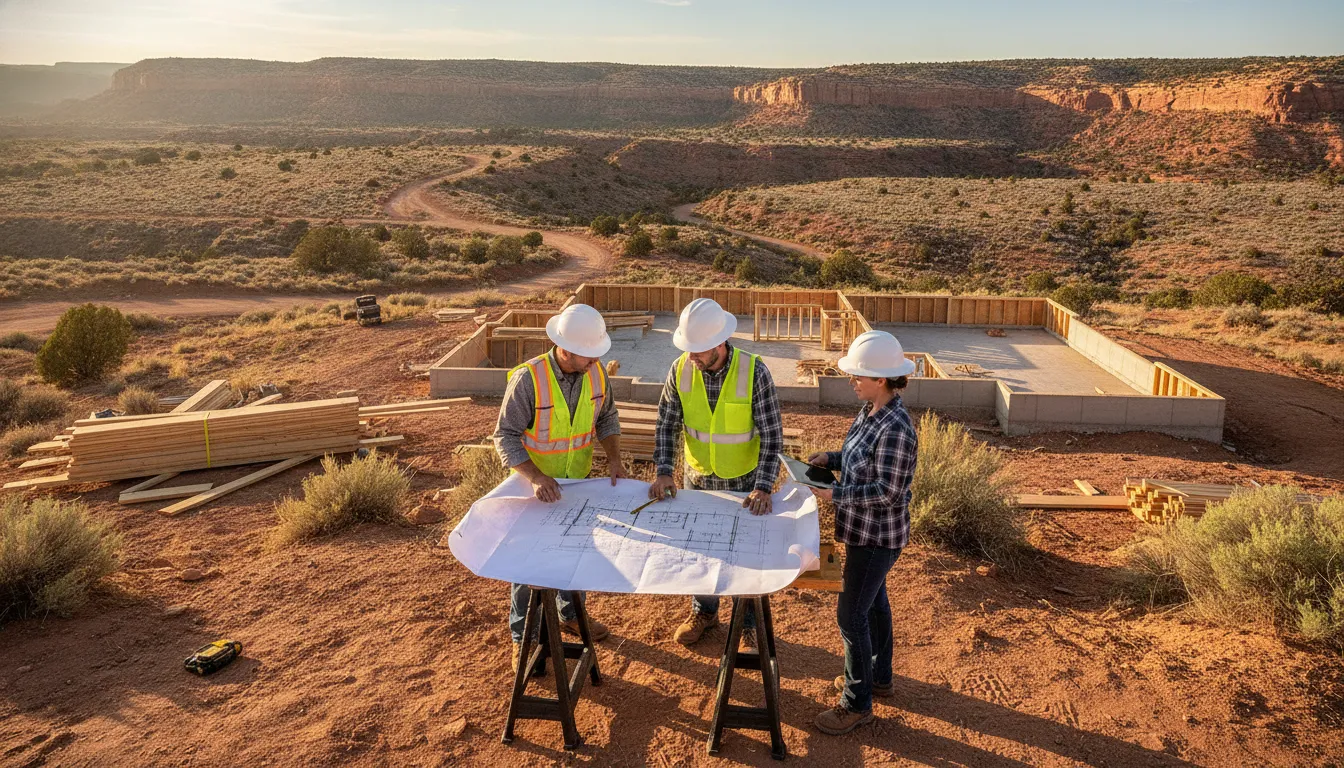
As you compare options, use the new home buying guide to organize your questions, then review available home floor plans and layouts to see which starting point best fits your needs. If you already own land, explore the advantages of building on your own lot before choosing a builder.
Which Type of Builder Is Right for Western Colorado Buyers?
The right builder depends on more than how quickly you want to move in. In Western Colorado, the lot itself can shape the project. High-desert ground, river corridors, sloped sites, and hillside parcels may require site planning and engineering that a standard subdivision plan does not address well.
A production builder can be a strong fit for buyers who want a home in a standard Grand Junction subdivision or an HOA community. Preselected floor plans, established infrastructure, and structured options make the process easier to compare and can provide a more predictable path to move-in. This approach works especially well when the available lots, home designs, and community rules already align with your priorities.
Custom or semi-custom building becomes more valuable when the property has distinctive features or the home needs to support a specific way of living. A home on a hillside lot may need a plan that responds to the slope rather than forcing the site into a standard footprint. A parcel near a river corridor may call for careful attention to drainage, access, orientation, and materials. In the high-desert climate, regional knowledge also matters when selecting assemblies and features that support durability and energy efficiency. Custom builders with Western Colorado experience can account for these conditions from the beginning.
Lot preparation is another important consideration. With Integrity Homes, in-house excavation through High Grade Concrete and Excavation helps keep sitework connected to the broader building plan. That can be useful when grading, access, or foundation preparation requires close coordination. Buyers who already own land, or who are evaluating a parcel outside a planned community, can learn more about building on your own lot.
For many buyers in Mesa County, the decision is not simply custom versus production. A semi-custom path can provide a defined process while allowing meaningful changes to the layout, finishes, and relationship between the home and the land. It is worth comparing your lot, timeline, design priorities, and desired level of involvement before choosing. For a broader framework, review the home building process guide.
Questions Every Buyer Should Ask Before Choosing a Home Builder
The right questions help you compare a production builder with a custom or semi-custom partner on the factors that will shape your experience. Not just the initial floor plan.
- What customization options are available? Ask whether you can adjust room sizes, finishes, storage, and structural details, or whether you are choosing from a fixed menu. Production homes may offer limited selections, while custom and semi-custom approaches can better reflect how you live.
- Can I bring my own plans? Find out whether the builder will review your plans, adapt an existing concept, or create a design with you. This clarifies how much design ownership you will have before construction begins.
- What is included in the base price? Request a clear explanation of allowances, finishes, appliances, sitework, utilities, and items treated as upgrades. A straightforward scope makes it easier to compare proposals accurately across builder types.
- How do you handle site preparation and challenging lots? Ask who evaluates the property, manages excavation, and coordinates engineering or utility work. This matters especially for buyers building on a distinctive lot in Grand Junction, Mesa County, or elsewhere on the Western Slope.
- Can I see past projects? Review completed homes that show the builder’s craftsmanship, design range, and attention to detail. Ask to see work similar in scale and style to the home you want, rather than relying only on model-home photography.
- What does your typical timeline look like? Ask for separate expectations for design, permitting, site preparation, and construction. A builder should explain what controls the schedule and how changes affect it, whether the process is standardized or tailored to your project.
- How does communication work during construction? Learn who your point of contact will be, how decisions are documented, and how often you receive updates. Tools such as Buildertrend can give homeowners clearer visibility than an informal, occasional update schedule.
Not sure which approach fits your vision?
Take the Home Design Quiz to clarify your priorities before you meet with a builder. Your answers can help frame a more productive conversation about layout, personalization, and the kind of building experience you want.
Frequently Asked Questions
What is the difference between a custom builder and a production builder?
A production builder uses standardized floor plans, materials, and construction processes to build homes efficiently, often within a planned community. A custom builder develops the home around the buyer’s goals, lot, and design preferences. In Western Colorado, a semi-custom approach can combine a streamlined process with meaningful choices in layout, finishes, and site response.
Are custom-built homes better quality?
Quality depends on the builder’s craftsmanship, materials, supervision, and communication rather than the label alone. A custom project can provide closer attention to details that matter to your household, from room proportions to finish selections and lot-specific construction. Ask to review completed homes, understand who performs the work, and confirm how the builder documents decisions throughout the project.
How long does it take to build a custom home?
Timelines vary with the design, permitting, site conditions, selections, and construction scope. A traditional custom build commonly takes longer than a standardized production home. Integrity Homes’ semi-custom process follows a structured design, permitting, and construction sequence, and each lot and project has its own schedule.
Which is more affordable, a custom or production home?
Production homes generally have a lower initial price because standardized designs and purchasing create economies of scale. Custom homes typically require a higher investment for personalization and lot-specific work. Compare the complete scope, allowances, site preparation, and long-term fit, not only the starting price.
Schedule a Consultation for Your Western Colorado Home
Choosing between a custom and production builder is easier when your lot, design goals, timeline, and priorities are considered together. Integrity Homes can help you explore an approach that fits your vision for a home in Grand Junction or the Western Colorado region.
Schedule a consultation with Integrity Homes to discuss your project.