
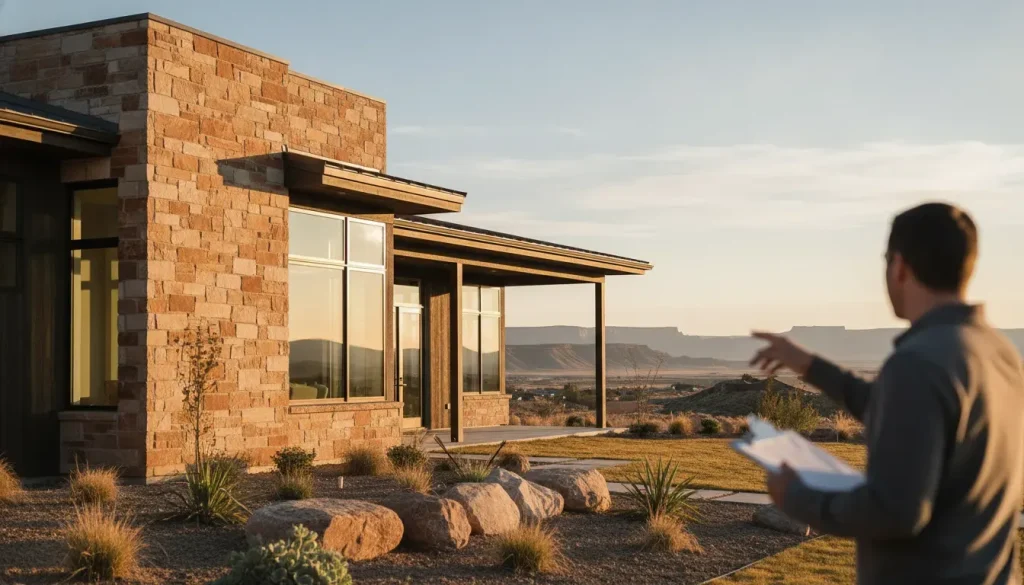
A custom home post-construction maintenance plan gives you a clear way to care for your new home after the excitement of move-in. Instead of relying on memory, organize the handoff information, learn your home’s systems, and create a simple schedule for the roof, exterior, mechanical equipment, finishes, and site. For Western Colorado homeowners, the plan should also account for high-desert sun, dry conditions, temperature swings, wind, and seasonal snow.
Talk with Integrity Homes about your next Western Colorado home.
What belongs in a post-completion care plan?
Post-completion care begins with a useful handoff, then continues through regular observation, routine service, and good recordkeeping. It is different from final cleaning or the last punch-list visit. Those activities prepare the home for occupancy. A care plan helps you keep the home comfortable, efficient, and well documented as the seasons change.
A practical plan has five parts:
- Handoff information: manuals, product details, finish-care instructions, plans, contacts, and system locations.
- Home orientation: a working knowledge of shutoffs, electrical panels, HVAC controls, filters, detectors, and exterior drainage.
- Routine checks: short monthly observations and scheduled service for systems that need professional attention.
- Seasonal preparation: tasks timed to Western Colorado’s heating season, summer sun, irrigation cycle, and changing weather.
- A maintenance log: dates, photos, service notes, model numbers, and questions for your builder or service professional.
The goal is not to create a complicated household project. It is to make the next right step visible, so small care tasks fit naturally into the way you already manage your home.
What should you organize before move-in?
The best time to assemble your home care file is during the final walkthrough, while the construction team and project information are still easy to reach. A digital folder is convenient for search and sharing, while a physical binder can be useful near the mechanical room or utility area.
Ask for, locate, or record the following information:
- Final plans or marked-up drawings that show major system locations.
- Equipment manuals, model numbers, filter sizes, and recommended service intervals.
- Paint colors, flooring details, cabinet-care guidance, countertop information, and other finish specifications.
- Appliance documents, installer details, product registration information, and service contacts.
- Locations for the main water shutoff, electrical panel, gas shutoff if applicable, irrigation controls, exterior hose bibs, and HVAC equipment.
- Drainage and grading notes, including areas that should remain clear so water moves away from the home.
- Builder support contacts and the written process for submitting questions or documenting a follow-up item.
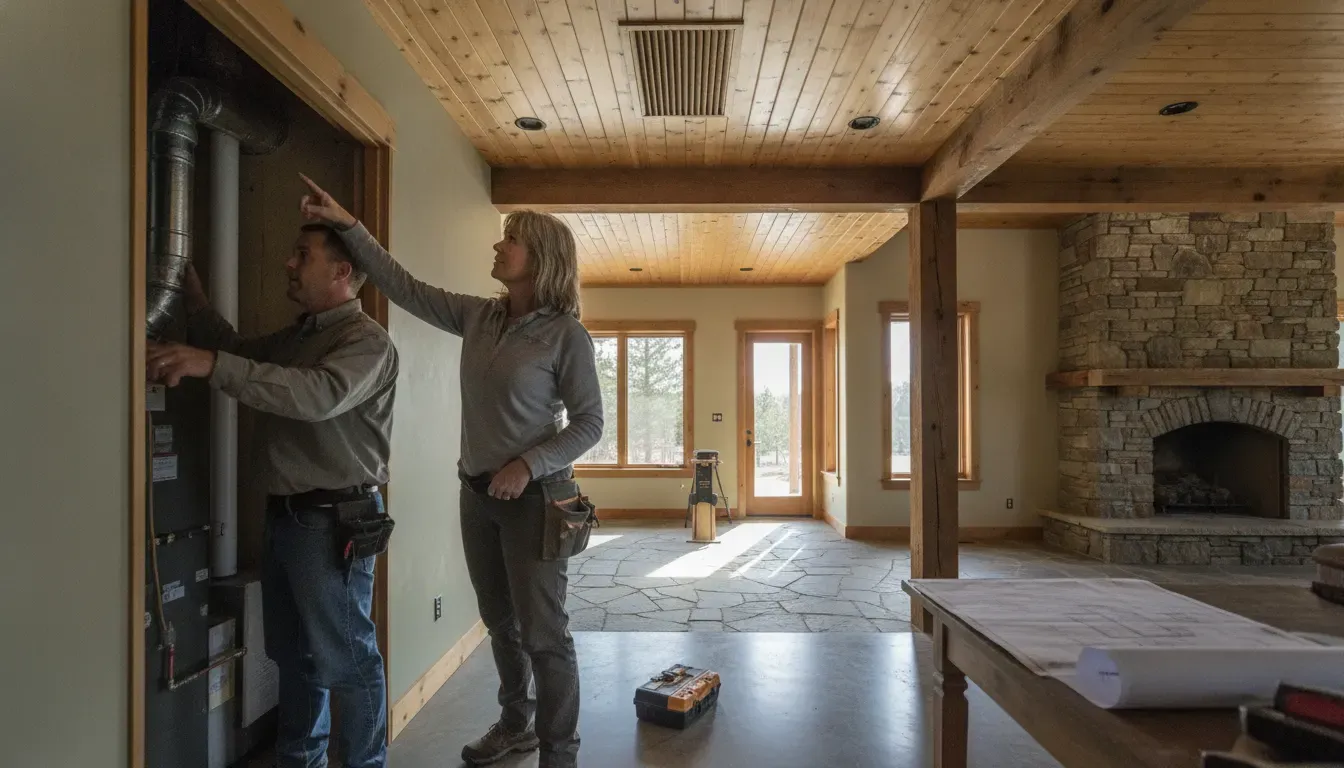
Take photos of labels and shutoff locations before the spaces become crowded with storage. A quick reference page with those photos can save time when a family member, service technician, or emergency responder needs information.
How do you create a schedule that is easy to follow?
Start with a short list of recurring actions, then assign each one a month, season, or service interval. The exact timing should follow the product manuals, professional recommendations, and the home’s specific systems. A calendar reminder, shared household app, or simple spreadsheet can all work well.
Monthly or every-few-weeks checks
These quick observations help you stay familiar with the home:
- Look under sinks and around water-using fixtures for moisture or unusual changes.
- Confirm that heating, cooling, ventilation, and exhaust controls respond as expected.
- Check filters and replace or clean them according to the equipment instructions.
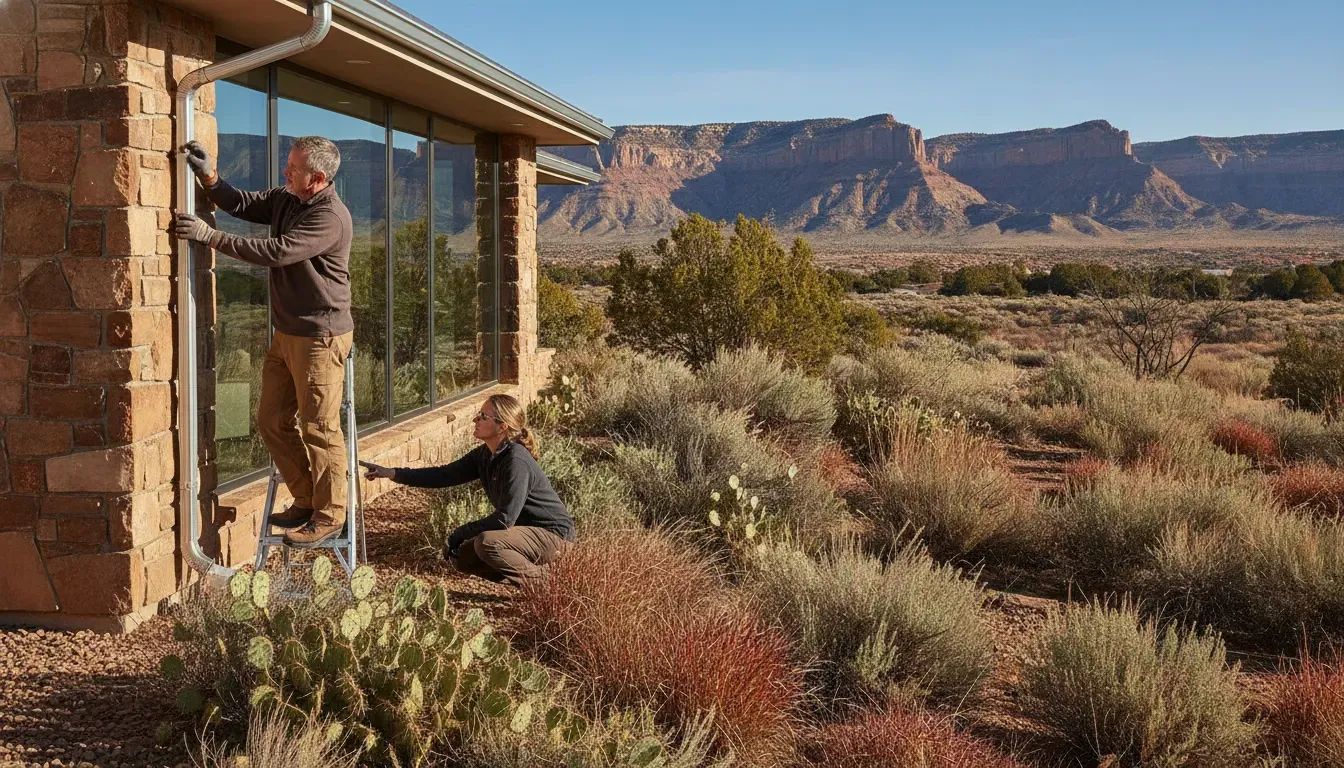
- Walk the exterior after significant weather and look at downspouts, drainage paths, gates, and visible sealants.
- Make sure vents, utility access points, and exterior drains are clear of stored items, leaves, or windblown debris.
- Test smoke and carbon monoxide detectors according to the manufacturer’s directions.
Spring and summer priorities
As the weather warms, look at the parts of the home that manage water, heat, and outdoor use. Clean gutters and inspect downspouts so water discharges away from the foundation. Review irrigation coverage and adjust spray that reaches siding, windows, doors, or the foundation. Inspect exterior finishes for sun exposure, cracking sealant, or areas that need manufacturer-approved care.
Schedule cooling-system service at the interval recommended for your equipment. Keep outdoor mechanical units clear of vegetation and stored materials, while following the manufacturer’s clearance guidance. Check weather stripping around frequently used doors and windows, and make sure screens, shades, and exterior lighting remain secure.
Fall and winter priorities
Before the heating season, arrange the recommended HVAC service and confirm that vents and returns are unobstructed. Clean gutters again if leaves collect on the roofline, and check that downspouts continue to direct water away from the home. Disconnect or protect exterior hoses and follow the instructions for any exposed plumbing or irrigation components.
During winter, keep snow and ice from blocking combustion-air openings, dryer vents, exterior drains, or walkways. Watch for areas where melting snow pools near the home. If a cold-weather event produces an unusual condition, document it with a photo and ask a qualified professional for guidance rather than guessing.
For a clearer view of how home projects are organized from planning through delivery, review the Integrity Homes building process. The post-completion plan begins where that process ends, with a practical bridge from handoff to confident ownership.
Which parts of a Western Colorado home deserve special attention?
Local conditions shape the maintenance rhythm. High-desert sun can affect exterior coatings and exposed materials, while dry air, wind, temperature swings, and occasional snow place regular demands on the building envelope and site. A home in Grand Junction may need a different cadence from a home in Montrose, Delta, Fruita, or Palisade, so use your property’s orientation, landscaping, exposure, and equipment instructions as the guide.
Roof, walls, windows, and drainage
Keep the roofline, flashing, gutters, downspouts, window transitions, doors, and exterior sealants on your visual-check list. Look for changes in water flow, staining, loose components, or gaps that merit professional evaluation. Maintain clear drainage routes and avoid adding soil, mulch, or landscaping features that redirect water toward the house.
When site conditions, grading, drainage, or concrete require attention, contact the builder or an appropriately qualified local professional. Integrity Homes’ own High Grade Concrete & Excavation crew brings sitework and excavation experience to its projects, so its team can provide useful context for questions connected to the original site and foundation work.
Heating, cooling, plumbing, and ventilation
Keep a record of equipment model numbers, filter sizes, service dates, and any unusual sounds or performance changes. Follow the manufacturer’s cleaning and replacement directions. Do not cover returns or supply vents with furniture, and keep mechanical access areas available for service.
Learn where the main water shutoff is located and how to isolate fixtures when needed. Check water heaters, visible supply lines, drain pans, and accessible connections for changes. For electrical, gas, plumbing, or HVAC work beyond basic owner checks, use a qualified professional who can follow applicable safety requirements.
Finishes, cabinetry, and appliances
New materials often come with specific care instructions. Use the products recommended for your flooring, stone, tile, cabinetry, countertops, hardware, and exterior surfaces. Wipe spills promptly, use protective pads under furniture, and avoid harsh cleaners that can dull or damage a finish. Save the care sheets in the same folder as the product information so a future service provider can see what materials are in the home.
How can you keep maintenance records useful?
A maintenance log turns scattered receipts and memories into a reliable history of the home. Keep the system simple enough that you will use it. For each task, record the date, what was checked, what was changed, the service provider, the equipment involved, and any follow-up date.
Photographs add useful context. Take a baseline set after move-in that shows exterior drainage routes, utility locations, mechanical equipment labels, shutoffs, and finish details. Add a dated photo when you notice a change. This record can help you explain a question clearly to the builder or a licensed trade professional.
It also helps to separate three kinds of information:
- Routine care: tasks your household can complete safely by following product instructions.
- Scheduled service: work that belongs on a recurring professional calendar, such as equipment service or a roof evaluation.
- Follow-up questions: items to send to the builder, manufacturer, or qualified trade when the next step is unclear.
Review the log twice a year. Remove outdated reminders, add new equipment after a replacement, and update contact details. A current record is more valuable than a long record that no longer reflects the home.
When should you contact your builder or a professional?
Use your builder’s documented support process for questions about original construction, product information, closeout documents, or items that need clarification after handoff. Share the location, a short description, photos, and the date you first noticed the change. Clear information helps the right person respond efficiently.
Use a qualified professional for specialized inspection, service, or repair work involving the roof, structure, electrical system, gas, plumbing, HVAC, or drainage. If an active leak, electrical hazard, gas odor, or other immediate safety concern occurs, follow the appropriate emergency response steps first.
Integrity Homes’ design-led approach and online project communication are built around clear homeowner decisions during the build. A post-completion care plan extends that same clarity into ownership. For more about the people and approach behind the company, visit the Integrity Homes team and company story.
Post-completion care plan questions, answered
These common questions can help you turn the general framework into a plan that fits your home.
What is the first step after moving into a new custom home?
Complete a careful orientation and organize the home’s records. Locate the major shutoffs and panels, confirm that you understand the HVAC controls, save manuals and finish-care information, and write down the correct builder and service contacts. Then set the first monthly and seasonal reminders.
How often should a new home receive maintenance?
Use a layered schedule: quick observations every few weeks, seasonal exterior and system checks, and professional service at the intervals recommended for each product. New construction still benefits from regular care because every home has different equipment, materials, exposure, and site conditions.
What should a Western Colorado homeowner watch outside?
Pay attention to roof drainage, gutters, downspouts, grading, irrigation spray, exterior sealants, sun-exposed finishes, vents, and walkways. After strong wind, heavy rain, or snow, take a quick exterior walk and record anything that looks different from the baseline photos.
Can a builder help with a post-completion care plan?
Yes. A builder can explain original systems, provide closeout information, identify product-care instructions, and clarify the best route for post-completion questions. When you speak with a builder, ask what information will be included at handoff and how follow-up communication is organized.
A well-organized care plan lets you enjoy the design and craftsmanship of your new home while giving each system the attention it needs. If you are still planning a custom or semi-custom home in Grand Junction, Montrose, or another Western Colorado community, connect with Integrity Homes to discuss your project.